📞 Call 281-683-6737 for a Free Inspection
Are termites in a tree in my Houston yard a threat to my house?
They can be. Termites in a living tree mean an active colony is working close to your home, and Formosan subterranean termites, which are established in the Houston area, are known to attack living trees as well as buildings (Texas A&M AgriLife Extension, Formosan Subterranean Termites, E-367, 2010). Not every tree colony reaches the house, so the right move is to have both the tree and your foundation checked before you cut, spray or wait. CPL Pest Control LLC does that inspection for free.
Termites in a tree near your Houston home? Call or text Chris at 281-683-6737 for a free termite inspection. We answer evenings and weekends.
Call | Text | Book online
When you call, tell us what kind of tree it is, how close it is to the house, and whether you’ve seen mud tubes, winged insects or soft wood anywhere on the home.
Which termites attack trees around Houston?
The termite most tied to tree damage here is the Formosan subterranean termite. Texas A&M AgriLife says (E-367, 2010):
- Formosan termites have been known to attack more than 50 tree species, including pecan, citrus, wild cherry, cherry laurel, sweet gum, cedar, willow, wax myrtle, Chinese elm and white oak.
- Their colonies are at least four times as large as native subterranean termite colonies, and a colony can grow to more than 1 million termites.
- Native subterranean termites generally feed on the softer wood a tree grows in spring. Formosan termites eat both the soft and the hard seasonal wood, which is why they do more damage.
- Trees weakened by termite feeding may blow over in strong winds.
Drywood termites are a different problem. They live inside dry wood above ground, like trim, furniture and attic framing, and leave small pellets instead of mud (AgriLife E-367). If that sounds more like what you’re seeing, read our guide on how to get rid of drywood termites in Houston.
Texas A&M AgriLife says the first Formosan termite infestations in Texas were found in 1956 near the Houston Ship Channel in Pasadena, and that Formosan termites are now in at least 30 Texas counties and every major metro area (AgriLife E-367, 2010).
How can I tell if the termites in my tree are getting into my house?
Subterranean termites travel from the soil, so the signs show up low on the house first. AgriLife lists these signs of an infestation (E-367, 2010):
- Mud shelter tubes running up from the soil onto the foundation or slab edge.
- Winged swarmers or shed wings on window sills or near indoor lights. Formosan termites swarm at night and are drawn to lights. AgriLife says a Formosan swarm means a colony is nearby and may be attacking a nearby building or tree, and swarmers inside the house strongly suggest an active infestation in the house itself.
- Damaged wood that sounds dull or hollow when you tap it, even if the paint looks fine.
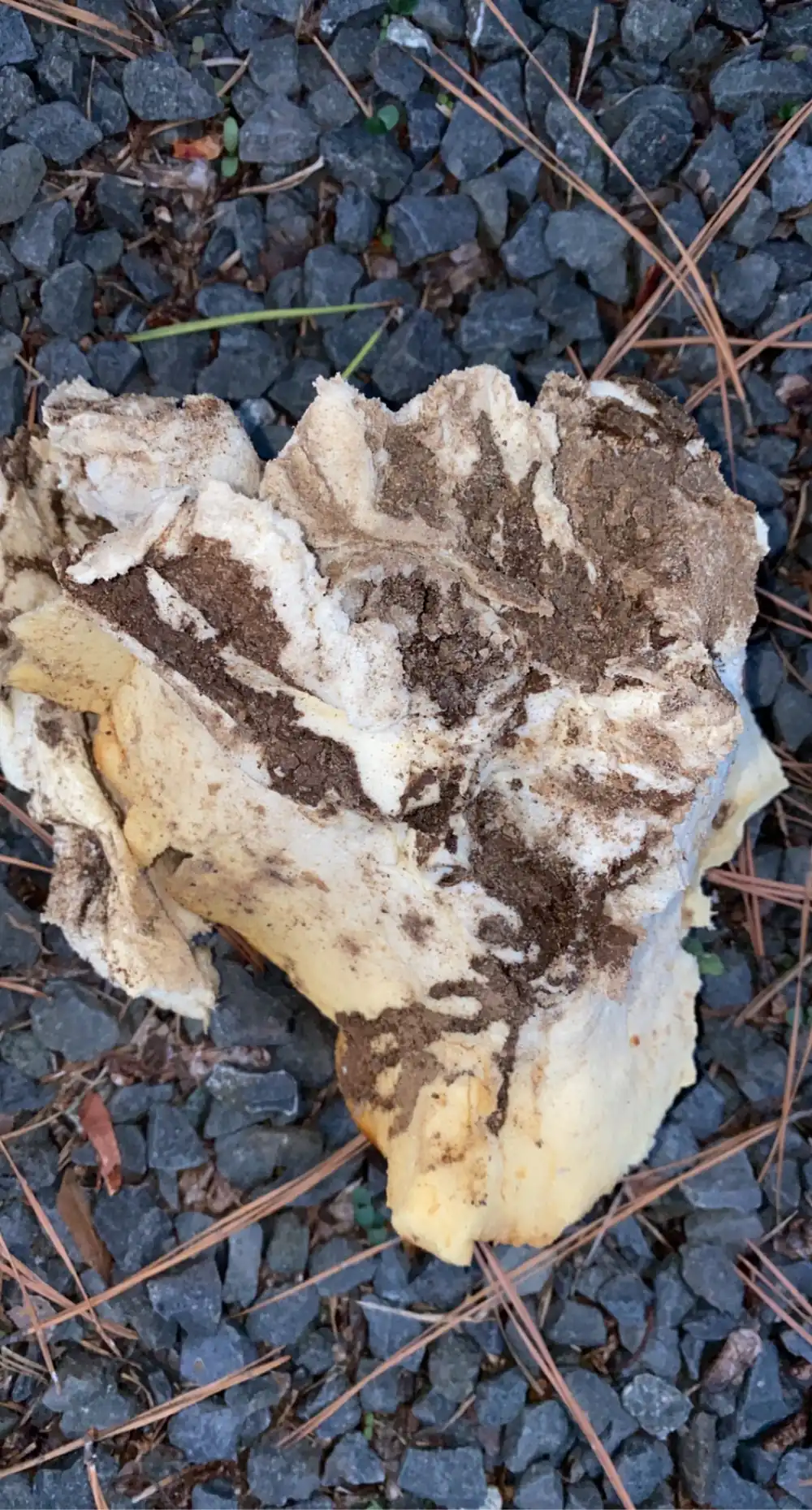
- Carton, a crumbly mix of chewed wood, soil and saliva. Formosan colonies can build carton nests inside wall spaces if they have moisture.
Walk the outside of the house and look closely at:
- The foundation of the house, garage and any sheds
- Attached porches, patios and sidewalks that touch the slab
- Spots where A/C lines, gas lines and pipes go through the wall
- Low areas where soil stays wet next to the foundation
If the tree sits close to the house, check the side of the house facing the tree first.
Free termite inspection. Chris will check the tree, the soil around it, and your foundation, slab edges and entry points, tell you what he finds, and give you a price before any work starts. Book your free inspection or call or text 281-683-6737.
Should I cut down a tree that has termites in it?
Not before you know what you’re dealing with. Cutting into the tree won’t get rid of the colony, because subterranean termites nest in the soil. AgriLife notes that below-ground nests are usually away from the structure and hard to find (E-367, 2010). Taking the tree down can leave the colony looking for its next meal, and your house may be the closest one.
Here’s how to handle the tree itself:
- Have an arborist check whether the tree is sound. A tree weakened by termites can fall in a storm. CPL handles the termites. A certified arborist can tell you whether the tree should stay.
- Know whose tree it is. City of Houston Urban Forestry removes dead or hazardous trees on street rights-of-way, and a permit is required to remove any tree on city property, including rights-of-way, medians and setbacks. For trees on private property, the city tells residents to contact a professional arborist or tree service (Houston Permitting Center, Urban Forestry). You can report a right-of-way tree to 311.
- Clean up dead wood. Houston’s property maintenance code requires owners to remove dead trees, limbs and debris reasonably likely to give insects or rodents a place to live or breed (Code of Ordinances Sec. 10-363, as quoted by Houston 311).
- Don’t bring termites home. AgriLife says infested old shoring timbers and recycled railroad ties used in landscaping are thought to be the main way Formosan termites spread in Texas, along with pallets, mulch and sod from infested areas (E-367).
- Keep wood and water away from the slab. AgriLife recommends removing wood-to-soil contact and reducing moisture around the house. Move firewood and lumber off the ground and away from the walls, and fix leaky hose bibs and A/C drip lines.
What does CPL do when termites show up in a tree near a Houston home?
Here’s what to expect when you call CPL Pest Control LLC for termite treatment in Houston:
- A free inspection of the tree and the house. We look at the tree and the soil around it, then go over the foundation, slab edges, porches, garage and wall penetrations for mud tubes, swarm wings and damaged wood.
- Identify the termite. Formosan, native subterranean and drywood termites are handled differently, so we confirm what you have before recommending anything.
- A clear plan and price. We explain whether the termites are in the house or only in the yard, what your treatment options are, and what each costs before any work starts.
- Treatment matched to what we find. That can mean treating the area around the tree, protecting the home’s foundation, or both. Our guide on how to treat for termites in Houston explains the common approaches.
Ask us about our service guarantee.
Two Google reviews on our Houston listing describe this kind of call in the customers’ own words:
“This year, I saw some termites in my yard. Chris inspected and assessed that they were not getting into the house. He sprayed that area to get rid of them and then sprayed my trees again just as a precaution.” (Jessica H., Google review)
“Was very impressed with the knowledge they provided and they identified another issue I had. A TREE FULL OF TERMITES. didnt even know and they identified the problem before the termites did any real damage to my home.” (Fernando R., Google review)
If you’re buying a home with big trees in the yard, a wood destroying insect report is worth getting before closing.
Frequently asked questions about termites in trees in Houston
Will termites in my tree spread to my house?
They can. A subterranean colony forages through the soil, and a tree close to the house puts that colony within reach of the foundation. An inspection tells you whether they’ve already reached the house.
Can I just spray the tree myself?
Spraying the termites you can see won’t reach the colony. Subterranean termites nest in the soil, often away from the tree and the house, and their nests are hard to find (AgriLife E-367).
Will the City of Houston remove a tree with termites?
Only if it’s a city tree. Urban Forestry removes dead or hazardous trees on street rights-of-way. For trees on your own property, the city says to hire an arborist or tree service (Houston Permitting Center).
How do I know if they’re Formosan termites?
Formosan swarmers are yellowish brown, and their wings carry a dense covering of tiny hairs. Formosan soldiers have teardrop-shaped heads and give off a white, sticky fluid when disturbed (AgriLife E-367). We’ll identify them during the free inspection.
Is the inspection free?
Yes. The termite inspection is free, and you’ll get a price before any work starts.
Do you answer after hours?
We answer evenings and weekends at 281-683-6737.
Ready to find out if the termites in your tree are after your house?
Don’t cut the tree or spray it until you know where the colony is going. Call, text or book online, and Chris will check the tree and your home and give you a price before any work starts.
Call 281-683-6737 | Text Chris | Book a free inspection
Related reading and services:
- Termite treatment in Houston, TX
- How to treat for termites in Houston
- How to get rid of drywood termites in Houston
- Pest control in Houston, TX
- Contact CPL Pest Control
About the author: Christopher Villarreal owns CPL Pest Control LLC (Texas TPCL license 0567655) and has over 20 years of experience in pest control. CPL Pest Control LLC is licensed and insured and serves Houston and the Greater Houston area.
Published November 11, 2026.