📞 Call 281-683-6737 for a Free Inspection
Does my Pasadena home need a termite inspection?
Yes. If you own a home in Pasadena and haven’t had a termite inspection in the last year, now is a good time. Pasadena is where Formosan termites were first found in Texas, in 1956 near the Houston Ship Channel (Texas A&M AgriLife Extension, E-367, 2010), and Texas A&M researchers have collected all three major types of structural termites in the city. Each type needs a different treatment, so the first step is a free inspection that tells you which one you have.
Worried about termites in your Pasadena home? Call or text Chris at 281-683-6737 for a free inspection.
Call | Text | Book online
Why are termites such a problem in Pasadena?
Pasadena has a long termite history and a lot of older homes:
- Texas’ first Formosan termites. Texas A&M AgriLife says the first Formosan termite infestations in Texas were discovered in 1956 near the Houston Ship Channel in Pasadena, Harris County. The species has since spread to at least 30 Texas counties (E-367, 2010).
- All three termite groups live here. A Texas A&M survey published in 1987 collected members of all three main structural termite groups in Pasadena: native subterranean termites (Reticulitermes), Formosan termites (Coptotermes) and drywood termites (Incisitermes) (Howell, Hamman and Granovsky, Southwestern Entomologist, 1987). One house can have more than one problem.
- Older houses. Half of Pasadena’s homes were built in 1977 or earlier, and about 37% were built before 1970 (American Community Survey 2020-2024 5-year estimates, Census Reporter). Older homes have had decades of exposure, plus settled slabs, old wood trim and earlier repairs where termites can get in.
- Old timbers in the yard. AgriLife says Formosan termites have been spread in recycled railroad ties and shoring timbers that end up in landscapes (E-367, 2010). If you have old ties or timbers in flower beds, keep an eye on them.
Which termites get into Pasadena homes?
| Native subterranean | Formosan subterranean | Drywood | |
|---|---|---|---|
| Where the colony lives | In the soil | In the soil, and sometimes in “carton” nests inside walls or trees | Inside dry wood, with no soil contact |
| Colony size | Up to 250,000 workers after 3 to 5 years (AgriLife, 2025) | More than 1 million within 5 years (AgriLife E-367, 2010) | Small colonies inside the wood they eat |
| When they swarm | Spring and early summer | At night, early May through June, drawn to lights | AgriLife E-366 (2005) describes swarms in late August and early September |
| What you’ll see | Mud tubes, wings on windowsills, hollow wood | Mud tubes, clay-like carton, swarms around porch lights | Tiny six-sided pellets and small “kick-out” holes |
Sources: Texas A&M AgriLife, Subterranean Termites (ENTO-PU-036, 2025), AgriLife E-367 (2010) and AgriLife E-366, Drywood Termites (2005).
Formosan termites are the ones Pasadena homeowners should take most seriously. AgriLife says their colonies are at least four times larger than native subterranean colonies, they can build nests above ground inside walls, and they attack more than 50 kinds of living trees, including pecan, citrus and oak (E-367, 2010).
Drywood termites are a Gulf Coast problem. AgriLife says their highest concentrations in Texas are along the Gulf Coast (E-366, 2005). They don’t need soil, so they can move in through attic vents, eaves and gaps around doors and windows, and they can also come in inside used furniture. For a deeper look, read our guide on how to get rid of drywood termites in Houston.
Why check for termites in November if they swarm in the spring?
Swarms are just the most visible sign. Subterranean colonies are in the soil and walls all year, and drywood colonies live inside the wood, so the damage doesn’t stop when the swarms do. The fall is a good time to get an inspection because:
- You’ll know before spring. If there’s a colony, you can treat it now instead of finding out when it swarms next year.
- You’re already moving things around. Pulling holiday boxes out of the attic or moving furniture is a good time to look for pellets, wings and mud.
- Termites in trees count too. Formosan termites can live in yard trees. If a tree near the house is infested, it’s worth checking the house as well.
What are the signs of termites in a Pasadena home?
- Mud tubes running up the slab, foundation, pipes or siding
- Wings on windowsills, in spider webs or near lights inside the house
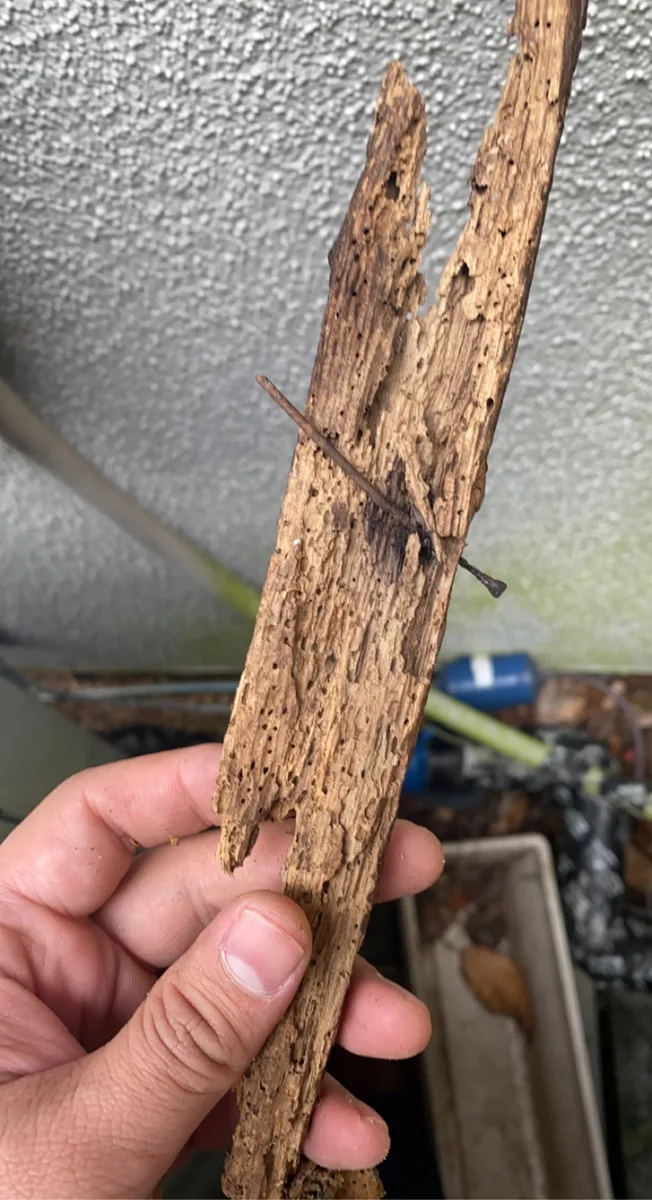
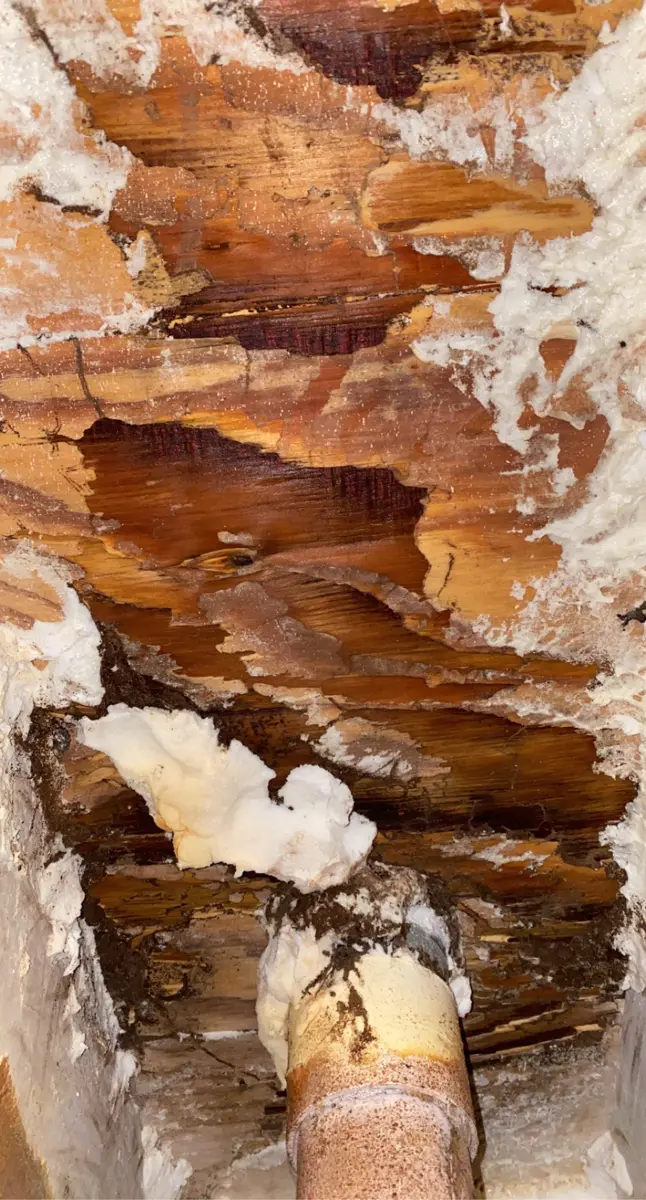
- Hollow or soft wood in baseboards, door frames or trim that gives when you press it
- Clay-like “carton” packed into wall voids or hollow wood, a Formosan sign
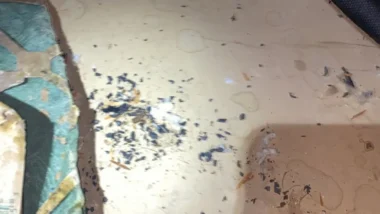
- Tiny pellets about 1/32 inch long with six sides, piled under furniture, on windowsills or in drawers, a drywood sign (E-366, 2005)
- Small round holes about 1/16 inch across in wood, where drywood termites push out pellets (E-366, 2005)
- Bubbling or rippled paint and doors or windows that suddenly stick
AgriLife also notes that Formosan termite damage can cause electrical shorts (E-367, 2010), so don’t ignore mud or carton near outlets or wiring.
Free 58-point pest survey. Not sure if it’s termites, ants or old damage? Chris will check your foundation, slab edge, eaves, garage, attic access and yard trees for termite signs, show you what he finds, and give you a price before any work starts. Book your free survey or call or text 281-683-6737.
How does CPL handle termite treatment in Pasadena?
We start by figuring out which termite you have, because that decides the treatment. This is the same approach we use for termite treatment in Houston:
- Free inspection. We check the foundation, slab edge, plumbing penetrations, garage, eaves, attic access and nearby trees, and we look for mud tubes, carton, wings and pellets.
- Subterranean and Formosan termites. We treat the soil around and under the home with a liquid termiticide to stop termites coming up from the ground.
- Drywood termites. Many drywood colonies are small and can be handled with a localized treatment right where they are. CPL doesn’t do tenting or fumigation. We’ll inspect, tell you what we find, and explain the treatment options that fit your home.
- Prevention advice. We’ll show you what’s giving termites a way in, like wood touching soil, leaks, old timbers in beds or gaps at vents.
Ask us about our service guarantee.
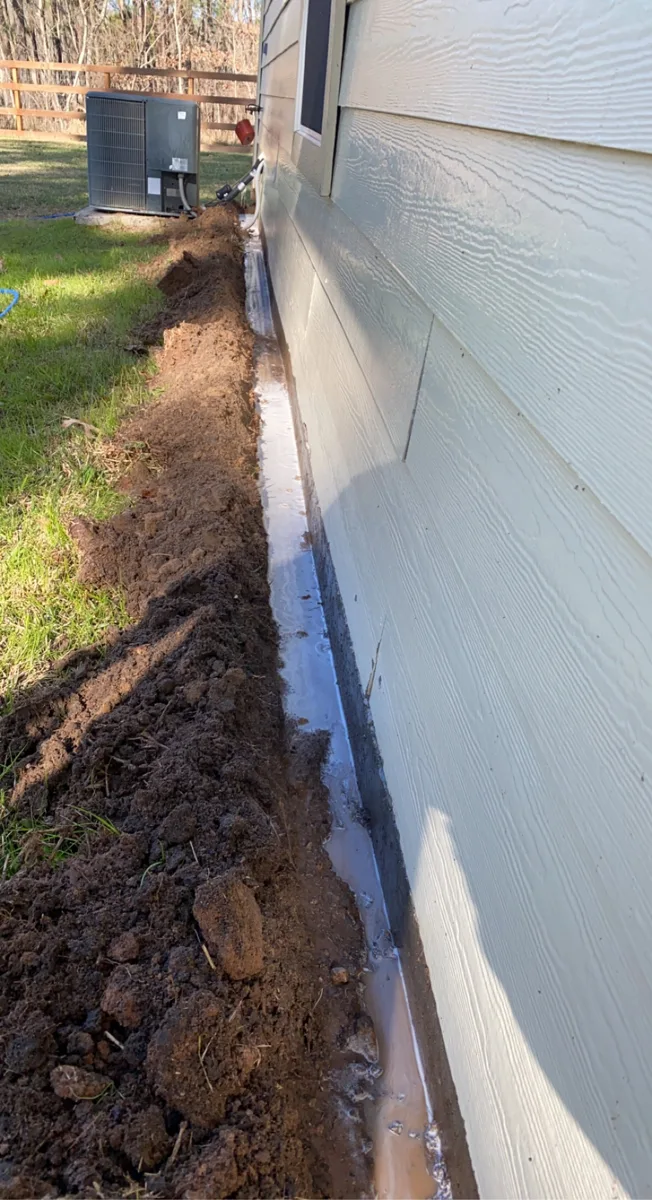
Here’s what two of our Houston-area termite customers said on Google:
“Chris was extremely professional and communicative with his service. He helped me treat some dry wood termites. He was thorough in his inspection and explanation of the situation. Highly recommend.” (Benjamin Gonzalez, Google review)
“My experience with CPL was better than I could have imagined. Not only was Chris extremely knowledgeable, but was professional and courteous. His main goal was to help us and treat the termites so that they wouldn’t be a problem again.” (David Garcia, Google review)
Do I need a termite report to buy or sell a home in Pasadena?
Often, yes. Lenders and buyers usually want one. AgriLife says Texas requires an official Wood Destroying Insect (WDI) report whenever an official termite inspection is done (E-367, 2010). CPL Pest Control LLC can do the inspection and the report. Learn more on our termite reports (WDI) page. Building a new home or adding on? Read about pre-construction termite treatment.
What can I do to make my Pasadena home less attractive to termites?
These tips come from Texas A&M AgriLife guidance:
- Keep wood off the soil. Firewood, lumber, fence boards and old railroad ties shouldn’t touch the ground next to the house.
- Keep mulch pulled back a few inches from the foundation, and keep soil below the slab edge so you can see mud tubes.
- Fix leaks and drainage. Leaky faucets, AC lines and gutters that dump water at the foundation keep the soil wet.
- Screen attic and foundation vents and caulk gaps at eaves, windows and doors to keep drywood swarmers out. AgriLife suggests 20-mesh screen (E-366, 2005).
- Check used furniture for pellets and holes before you bring it inside.
- Watch your trees. Hollow trees or trees with mud on the bark near your house should be checked.
Frequently asked questions about termites in Pasadena
Are Formosan termites in Pasadena?
Yes. Texas A&M AgriLife says Texas’ first known Formosan termite infestations were found in 1956 near the Houston Ship Channel in Pasadena (E-367, 2010).
Is it termites or flying ants?
Termite swarmers have straight antennae, a thick waist and four wings of the same size. Ants have elbowed antennae, a pinched waist and front wings that are bigger than the back ones. Save a few in a bag and we’ll identify them at the free inspection.
Do you tent homes for drywood termites?
No. CPL doesn’t do tenting or fumigation. Many drywood colonies are small and can be treated where they are. We’ll explain the treatment options that fit what we find.
How much does termite treatment cost in Pasadena?
It depends on the type of termite, the size of the home and how far the damage has spread. The inspection is free, and you’ll get a price before any work starts.
Do you answer evenings and weekends?
Yes. We answer evenings and weekends at 281-683-6737.
Ready to find out if termites are in your Pasadena home?
Termites don’t go away on their own, and the longer they feed, the more wood you’ll have to replace. Call or text Chris for a free termite inspection.
Call 281-683-6737 | Text Chris | Book a free inspection
Related reading and services:
- Termite treatment in Houston
- How to get rid of drywood termites in Houston
- Tawny crazy ants in Pasadena, TX
- Pest control in Houston, TX
- Contact CPL Pest Control
About the author: Christopher Villarreal owns CPL Pest Control LLC (Texas TPCL license 0567655) and has over 20 years of experience in pest control. CPL Pest Control LLC is fully licensed and insured and serves Pasadena and the Greater Houston area.
Published November 5, 2026.