📞 Call 281-683-6737 for a Free Inspection
Is that scratching in my Kingwood attic a rat?
Most likely, yes, if you hear it after dark. Texas A&M AgriLife says roof rats seldom burrow and normally nest in attics and double walls, and that rodent activity picks up after dark, which is the best time to listen for them (Texas A&M AgriLife, Managing Rats and Mice, 2013). In a neighborhood built inside a forest like Kingwood, roof rats have an easy road from the trees to your roofline. The fix is the same every time: confirm what’s up there, find where it gets in, then trap, bait and seal.
Hearing noises in your Kingwood attic? Call or text Chris at 281-683-6737 for a free rodent inspection. We answer evenings and weekends.
Call | Text | Book online
When you call, tell us what you’re hearing, when you hear it, and anything you’ve found, like droppings in the garage or chewed insulation.
Why do Kingwood homes get roof rats?
A few things about Kingwood line up with what roof rats look for: trees to travel on, shelter up high, and food nearby.
- A neighborhood built in the woods. Kingwood was developed by Friendswood Development Company and King Ranch on a 14,000-acre tract on the East Fork of the San Jacinto River, with plans that included greenbelts and riding and hiking trails (Texas State Historical Association, Handbook of Texas, Kingwood). Mature trees over the roofs and greenbelts behind the fences are good for people and good for roof rats. Texas A&M’s school IPM program says roof rats prefer high nesting sites like attics, walls, roofs, palm trees and vine-covered fences, and travel up to 300 feet for food (Texas A&M School IPM, IPM Action Plan for Rodents).
- Water close by. Kingwood sits on the East Fork of the San Jacinto River and was planned with a boat ramp with access to Lake Houston (TSHA). AgriLife says removing water sources, like leaky faucets, is part of rat control, so check hose bibs, A/C drip lines and pet bowls around the house.
- Many homes are 30-plus years old. In the two main Kingwood-area ZIP codes, the median home was built in 1988 (77339) and 1993 (77345), across about 28,800 homes (U.S. Census Bureau, American Community Survey 2020-2024 5-year estimates, table B25035, via Census Reporter). After three decades, soffits, roof vents and the gaps around pipes and A/C lines have had time to loosen, and those are the openings rats use.
- Fast growth, then annexation. Kingwood grew from 50 residents in 1986 to 37,397 by 1992, and it had been annexed by the City of Houston by 2000 (TSHA). Homes built in the same boom are now hitting the same age at the same time.
Is it a roof rat, a Norway rat or a mouse?
Where the nest is tells you a lot. AgriLife says that if the nest is high, it is usually a roof rat, and if it is underground, it is almost always a Norway rat (AgriLife, 2013).
| Roof rat | Norway rat | House mouse | |
|---|---|---|---|
| Size | 12 to 18 inches including tail | 11 to 19 inches including tail | 5 to 8 inches including tail |
| Tail | Longer than the body | Shorter than the body | Furless |
| Nests | Attics, double walls, trees | Burrows under foundations, slabs and debris | Paper, upholstered furniture, drawers |
| Peak young | Winter and spring | Spring and fall | Up to 13 litters a year |
Source: Texas A&M AgriLife, Managing Rats and Mice.
That “winter and spring” row is why late fall is the time to seal up. Roof rats average five to eight young per litter, and the young can breed at about 3 months old (AgriLife). AgriLife also says 100 or more roof rats can live together in harmony, so a few in the attic now can turn into a lot of them by spring.
What are the signs of rats in my Kingwood home?
AgriLife lists these signs (AgriLife, 2013):
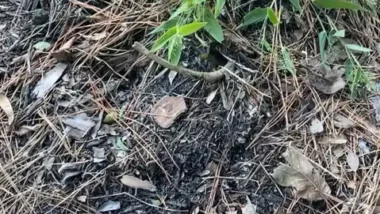
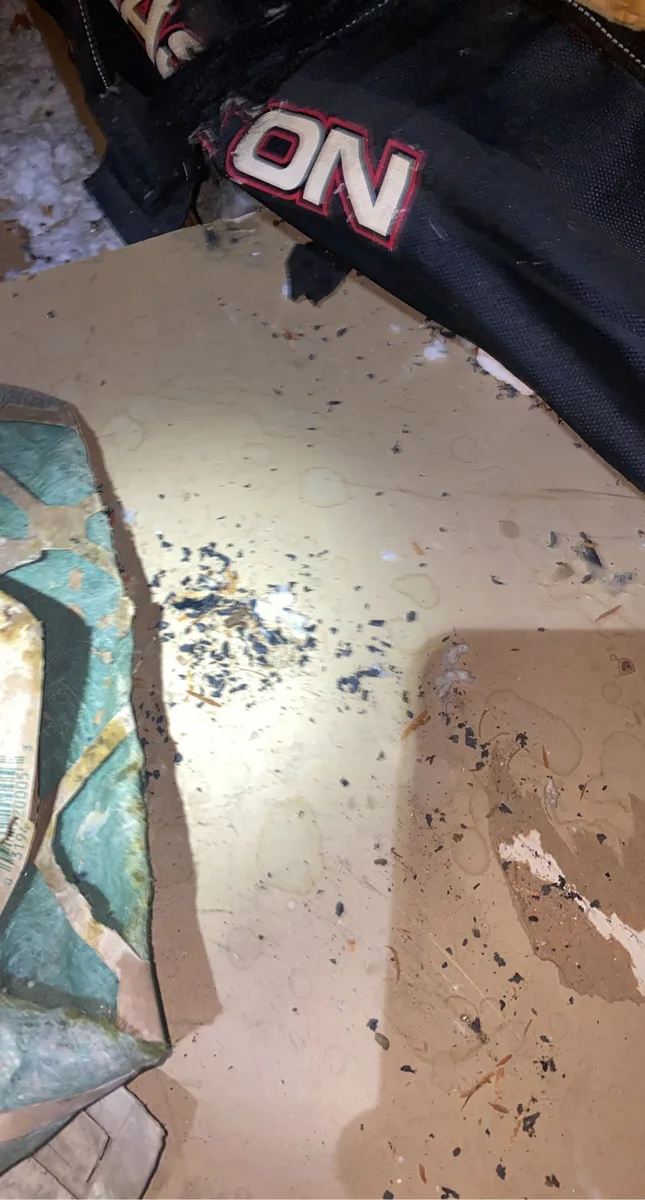
- Droppings in the attic, garage, pantry or under sinks. Fresh, numerous droppings point to a bigger, active problem.
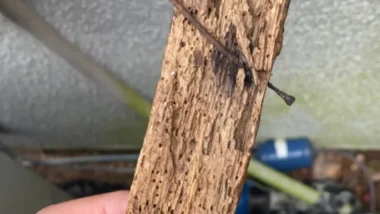
- Gnawing on wood, wiring, stored boxes, pipes or insulation. AgriLife notes rats chew wires, which may cause fires.
- Greasy smears along rafters, walls and pipes where their bodies rub.
- Sounds of running and squealing, mostly after dark.
- Smell, especially in a poorly ventilated attic or closet.
- Nesting material like shredded insulation, paper or leaves.
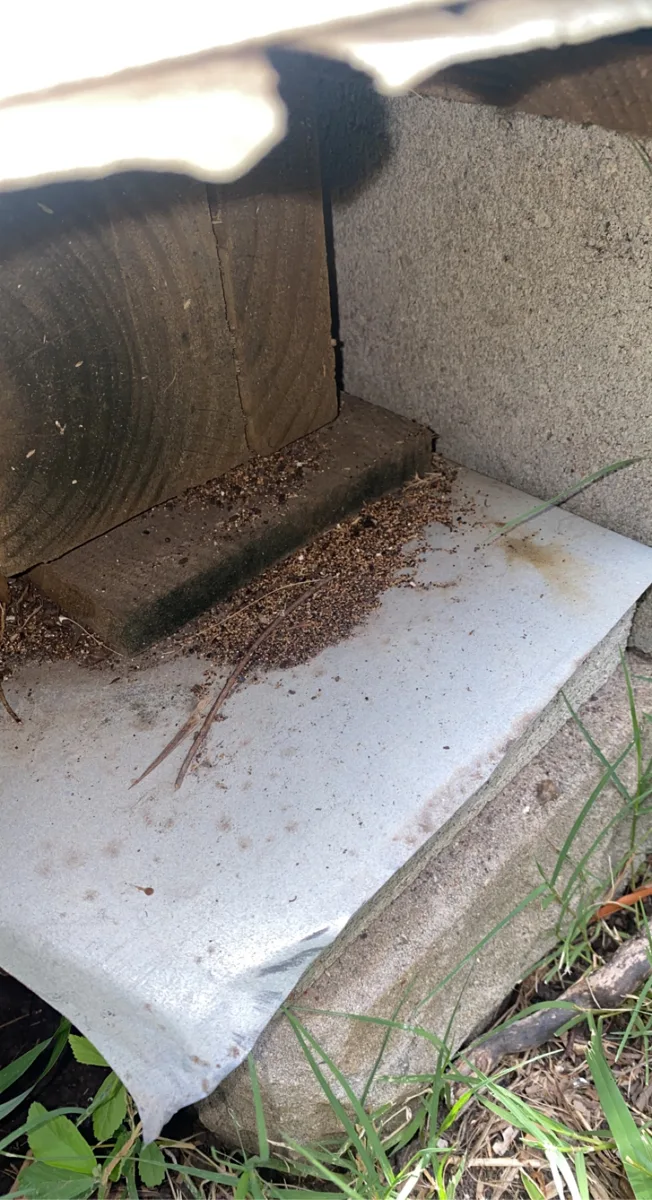
Free rodent inspection. Chris will check your attic, roofline, soffits, garage and the outside of your home for droppings, rub marks and entry points, tell you what he finds, and give you a price before any work starts. Book your free inspection or call or text 281-683-6737.
How are rats getting into my Kingwood attic?
Roof rats are climbers, so look up first. AgriLife recommends covering openings with 1/4-inch hardware cloth or steel wool, which tells you how small a gap is worth sealing (AgriLife, 2013). The entry points we check most in tree-heavy neighborhoods:
- Tree limbs and vines touching or hanging over the roof
- Gaps where the roofline meets the wall, and loose or torn soffit vents
- Roof vents, plumbing vent boots and the space around chimney chases
- Holes where A/C lines, gas lines, cables and pipes go through the wall
- Garage doors with worn bottom seals
- Fences and vines that run right up to the house
Rats travel along the same routes every night. That’s why we look for rub marks and droppings at the opening itself, not just in the attic.
Can rats damage my Kingwood attic?
Rats also chew. Wiring, A/C ductwork and insulation in the attic are all on the menu, which is another reason not to wait.
Is it a rat, or a squirrel or raccoon?
Kingwood’s trees bring squirrels and raccoons too. AgriLife says rodent activity increases after dark, so steady scurrying at night is a strong clue for rats, but the size of the opening and the droppings tell the real story. CPL Pest Control LLC handles both: rodent control, and wildlife control in Houston for raccoons, squirrels and opossums. The free inspection tells you which one you have.
How does CPL handle rat control in Kingwood?
Our rodent control in Houston and Kingwood follows the integrated approach AgriLife recommends: rodenticides and traps, plus removing shelter, food and water, plus rat-proofing, which AgriLife calls the most permanent means of control.
- Free inspection. We check the attic, roofline, soffits, garage and exterior for droppings, rub marks, nests and entry points.
- Trapping and baiting. Traps and bait go where the rats are actually traveling. AgriLife recommends bait boxes, which restrict access mainly to rodents.
- Sealing. We close the openings rats are using with rodent-resistant materials.
- Follow-up. We come back to check the traps and confirm the activity has stopped.
Our guarantee: 30-day guarantee if you are not completely happy with our service. No contracts.
What can I do now to make my Kingwood home less inviting?
These steps come from AgriLife’s rodent guidance (AgriLife, 2013):
- Trim limbs back from the roof. Cut branches and vines that touch or hang over the roofline.
- Store food in glass or metal. That includes pet food, bird seed and grass seed in the garage.
- Use covered trash cans and bring pet bowls in at night.
- Fix leaky faucets and hose bibs, and drain standing water.
- Get stored items off the floor. AgriLife suggests storing materials at least 18 inches off the ground or floor, with space between them and the wall.
- Pick up fallen fruit and nuts from the yard.
For more on sealing up, read how to keep rodents out of your Houston home.
Frequently asked questions about rats in Kingwood
When do rats get into Kingwood attics?
Rats are active all year in the Houston area. AgriLife says roof rats have the most young in winter and spring, so late fall is a smart time to inspect and seal up.
Can rats climb into my attic from the trees?
Yes. Roof rats are climbers that prefer high nesting sites, and Texas A&M’s school IPM program says they travel up to 300 feet for food. Branches touching the roof are an easy way in.
Do traps alone fix a rat problem?
Usually not. Traps catch the rats inside, but if the openings stay open, more move in. AgriLife calls rat-proofing the most permanent means of control.
Is the rodent inspection free?
Yes. The inspection is free, and you’ll get a price before any work starts.
Do you answer after hours?
We answer evenings and weekends at 281-683-6737.
Ready to get the rats out of your Kingwood attic?
Noises at night, droppings in the garage or chewed insulation are worth a look now, before roof rats have their winter litters. Call, text or book online, and Chris will inspect your home and give you a price before any work starts.
Call 281-683-6737 | Text Chris | Book a free inspection
Related reading and services:
- Rodent control in Houston, TX
- Wildlife control in Houston, TX
- Cold snap rodents in Conroe, The Woodlands and Katy
- Termite control in Kingwood, TX
- Contact CPL Pest Control
About the author: Christopher Villarreal owns CPL Pest Control LLC (Texas TPCL license 0567655) and has over 20 years of experience in pest control. CPL Pest Control LLC is licensed and insured and serves Kingwood and the Greater Houston area.
Published November 13, 2026.