📞 Call 281-683-6737 for a Free Inspection
Do Cypress homes need termite treatment, even newer ones?
Yes, if termites are present, and a newer house doesn’t rule them out. Texas A&M AgriLife says the biggest termite populations in Texas are along the coast, and that when land is cleared and homes are built, termites often switch from fallen wood to the wood in those homes (AgriLife Extension, Subterranean Termites, E-368, 2010). Cypress has both: Gulf Coast soil and a lot of recent construction. If you’ve seen mud tubes, winged insects or soft wood, get an inspection before you buy anything off the shelf. CPL Pest Control LLC inspects Cypress homes for termites for free.
Termite signs in your Cypress home? Call or text Chris at 281-683-6737 for a free termite inspection. We answer evenings and weekends.
Call | Text | Book online
When you call, tell us what you found and where: mud on the slab, wings on a windowsill, or damaged trim or baseboards.
Why do termites find Cypress homes?
A few things about the Cypress area line up with what subterranean termites need: soil, moisture and wood.
- Lots of newer homes on recently cleared land. In the two main Cypress-area ZIP codes, the median home was built in 2003 (77429) and 2011 (77433). About 42% of the roughly 70,000 homes in those two ZIPs were built in 2010 or later (U.S. Census Bureau, American Community Survey 2020-2024 5-year estimates, tables B25035 and B25034, via Census Reporter). AgriLife says termites often move onto the wood in a structure after natural vegetation is cleared and buildings go up (E-368, 2010).
- Creeks and wet ground. The Cypress Creek watershed covers about 267 square miles of northwest Harris County, with about 250 miles of open streams, including Cypress Creek and Little Cypress Creek (Harris County Flood Control District, Cypress Creek). Creeks, channels and detention basins hold water after storms, and AgriLife says subterranean termites dry out easily and need moisture to survive.
- Master-planned growth. Bridgeland, a master-planned community of more than 11,000 acres with lakes and trails, is one example of how much land in the Cypress Creek corridor has been turned into neighborhoods (Bridgeland).
- Formosan termites are in the region. AgriLife says the first Formosan termite infestations in Texas were found in 1956 near the Houston Ship Channel, and that Formosan termites are now in at least 30 Texas counties and every major metro area (AgriLife Extension, Formosan Subterranean Termites, E-367, 2010).
AgriLife estimates subterranean termites cause about $500 million in damage in Texas each year (E-368, 2010).
Which termites will I find in a Cypress home?
AgriLife names two major subterranean termites in Texas, and drywood termites are a third, separate problem (E-368; Insects in the City, Texas A&M):
- Native (eastern) subterranean termites. The most commonly encountered termite in Texas. They live in the soil and build mud tubes to reach wood.
- Formosan subterranean termites. Also soil-based, but with colonies at least four times as large as native colonies, and they can build carton nests inside walls when they have moisture (E-367).
- Drywood termites. They live inside dry wood above ground, like trim, furniture and attic framing, and leave small pellets instead of mud. See our guide on how to get rid of drywood termites in Houston.
Getting the species right matters, because each one is treated differently.
What are the signs of termites in a Cypress house?
AgriLife lists these signs of subterranean termites (E-368, 2010):
- Swarmers or shed wings on windowsills, in spider webs or near indoor lights. AgriLife says this is usually the first sign homeowners notice, and that swarmers inside the house usually mean an active infestation in the structure.
- Mud tubes on the foundation or outside walls, running up from the soil.
- Damaged wood that sounds hollow when you tap it. Tunnels follow the grain and are often lined with mud.
- Blistered paint or wallboard, and raised or split spots in flooring.
Free termite inspection. Chris will check your slab edge, garage, wall penetrations, bath trap access and attic, tell you what he finds, and give you a price before any work starts. Book your free inspection or call or text 281-683-6737.
How do termites get into a slab home in Cypress?
If your Cypress home sits on a concrete slab, termites don’t need to chew through the concrete. They come in around it. AgriLife says subterranean termites enter through wood touching the soil and by building shelter tubes over or through cracks in the foundation (E-368). The spots AgriLife tells inspectors to check include:
- Cracks and expansion joints in the slab
- Places where plumbing and utility pipes come up through the slab, especially the bath trap under a tub or shower
- Where A/C lines, gas lines and electrical service enter the wall, and electric meter boxes set into the wall
- Soil, mulch or flower beds built up above the top of the foundation
- Fences, trellises or wood steps that touch the ground
- Wet soil from sprinklers or poor drainage next to the slab
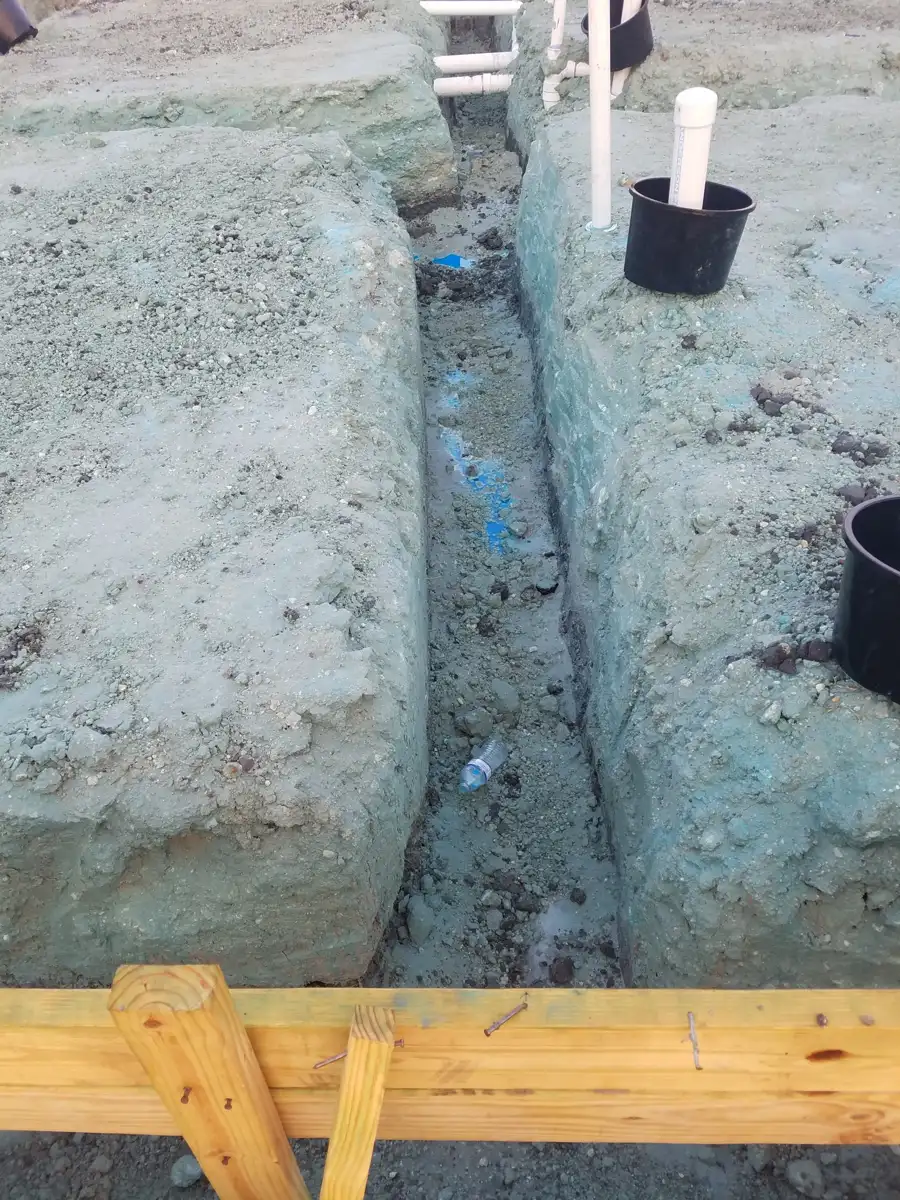
Newer homes have their own risk. AgriLife says grade stakes and wood scraps left in the soil after construction can serve as a path for foraging termites, and recommends removing form stakes, wood scraps and stumps from under and around the foundation (E-368). If you’re building, read about pre-construction termite treatment in Houston.
What does termite treatment in Cypress involve?
Here’s what to expect when you call CPL Pest Control LLC for termite treatment in Houston and the Cypress area:
- A free inspection. We go over the slab edge, garage, porches, wall penetrations, bath trap access and attic for mud tubes, wings and damaged wood.
- Identify the termite. Native subterranean, Formosan and drywood termites are handled differently, so we confirm what you have first.
- A clear plan and price. We explain where the termites are, what your treatment options are, and what each costs before any work starts.
- Treatment matched to what we find. AgriLife describes the main professional options as liquid termiticide treatments of the soil and termite baits (E-368). Our guide to the common termite treatments explains those approaches.
Ask us about our service guarantee.
AgriLife also notes that Texas law requires inspectors to complete a Wood Destroying Insect (WDI) report with each formal termite inspection and treatment (E-368). If you’re buying in Cypress, a wood destroying insect report is worth getting before closing.
What can I do now to make my Cypress home less inviting to termites?
These steps come from AgriLife’s termite guidance (E-368):
- Keep soil and mulch low. AgriLife says soil should be at least 6 to 8 inches below the top of the foundation or wall covering, so you can see any mud tubes.
- Pull dense shrubs back from the house. Plantings packed against the slab hold humidity and hide the foundation line.
- Point sprinklers away from the slab and fix leaky hose bibs and A/C drip lines.
- Break wood-to-soil contact. Keep firewood, lumber and wood scraps off the ground and away from the walls.
- Keep the bath trap accessible. If there’s no access panel, AgriLife recommends installing a removable plumbing hatch so it can be checked for mud tubes.
- Don’t bring termites home. AgriLife says recycled railroad ties and old timbers used in landscaping are thought to be a main way Formosan termites spread (E-367).
Frequently asked questions about termites in Cypress
My Cypress house is only a few years old. Can it have termites?
Yes. AgriLife says termites often move onto a structure’s wood after land is cleared and homes are built, and that leftover grade stakes and wood scraps can lead them to the house (E-368). A newer home is not a reason to skip an inspection.
I found winged bugs inside. Are they termites?
They could be termites or ants. AgriLife says termites often swarm at about the same time as some ants, and the two are sometimes confused. Swarming termites inside a house usually indicate an active infestation (E-368). Save a few in a bag or take a clear photo, and we’ll identify them during the free inspection.
Can I treat termites myself?
Store sprays may kill the termites you see, but subterranean termites nest in the soil, and their nests are hard to find (E-367). AgriLife recommends licensed professional inspectors for termite work (E-368).
Do you tent homes for termites?
No. CPL doesn’t do tenting or fumigation. We’ll explain the treatment options that fit what we find.
Is the termite inspection free?
Yes. The inspection is free, and you’ll get a price before any work starts.
Do you answer after hours?
We answer evenings and weekends at 281-683-6737.
Ready to find out if termites are in your Cypress home?
Mud tubes, wings or soft wood are worth a look now, before the damage spreads. Call, text or book online, and Chris will inspect your home and give you a price before any work starts.
Call 281-683-6737 | Text Chris | Book a free inspection
Related reading and services:
- Termite control in Houston, TX
- Pest control in Cypress, TX
- How to treat for termites in Houston
- How to get rid of drywood termites in Houston
- Contact CPL Pest Control
About the author: Christopher Villarreal owns CPL Pest Control LLC (Texas TPCL license 0567655) and has over 20 years of experience in pest control. CPL Pest Control LLC is licensed and insured and serves Cypress and the Greater Houston area.
Published November 12, 2026.