
📞 Call 281-683-6737 for a Free Inspection
Getting rid of rats starts with finding the way in
The first real cold front of the season usually changes what Conroe homeowners hear at night. Once evenings turn cool, roof rats and house mice start looking for warm, dry places to nest, and a quiet attic over a heated living space fits that need. If something is scurrying over your ceiling this November, you are not imagining it.
Getting rid of rats in Conroe comes down to three jobs done in order: confirm it is rodents, find every opening they are using, then remove the animals and close those gaps for good. Skip the sealing and new rats tend to move right back in.
Free rodent inspection in Conroe and The Woodlands
Hearing scratching in the attic or finding droppings in the garage? Call or text Chris at 281-683-6737 and CPL Pest Control LLC will check your attic, roofline and exterior for rodent signs and entry points. Locally owned & family owned. We answer evenings and weekends.
Call | Text | Book online
Why do rats move indoors in Conroe every fall?
Montgomery County homes sit among tall pines, oaks, creeks and greenbelts, and that tree cover gives roof rats a highway right up to the shingles. Branches that brush a roof, vines on a fence and power lines all work as travel routes. When temperatures drop, the rodents that spent summer outdoors follow those routes toward warmth.
Food keeps them around. Pet bowls left on the patio, bird feeders, fallen pecans and citrus, and garbage cans with loose lids all feed a rodent population. Add the leaking hose bibs and AC condensate lines common around Texas homes, and rats have food, water and shelter within a few feet of each other.
Timing matters too. Texas A&M AgriLife reports that Norway rats produce the most young in spring and fall, while roof rats peak in winter and spring (Texas A&M AgriLife Extension, Managing Rats and Mice, 2013). A few animals that slip inside in November can become a much bigger colony by spring.
Rats, mice or something bigger?
Before you buy traps, figure out what you are dealing with:
- Roof rats are slim climbers with tails longer than their bodies. AgriLife notes they nest in attics and double walls, so a nest up high usually points to a roof rat.
- Norway rats are heavier, have shorter tails and burrow under slabs, sheds and debris. A nest underground is almost always a Norway rat.
- House mice are much smaller and build neat little nests in odd spots like paper sacks, drawers and upholstered furniture.
If the noises are loud thumps during the day, or you find a torn soffit or chewed vent big enough for your fist, you may have squirrels, raccoons or another animal in the attic. Those calls go to our wildlife control service in Conroe instead.
Signs of rats in your attic and home
AgriLife lists several clues that point to a rodent problem (same source as above):
- Noises after dark. Rodent activity increases at night, which is the best time to listen. Running, scratching and squealing above the ceiling or inside a wall are the classic sign of rats in an attic.
- Droppings. Look in the attic, along garage walls, behind the fridge, in the pantry and under sinks. Fresh droppings are dark and soft; old ones are dry and crumbly.
- Gnaw marks. Rats chew wood, insulation, stored boxes and wiring. Chewed wiring is a real concern, so do not ignore it.
- Greasy smears. Dark rub marks appear where their bodies brush rafters, pipes and walls along regular routes.
- Nesting material and smell. Shredded insulation, paper or fabric and a musty odor, especially in a closed-up attic.
Where rats get into Conroe homes
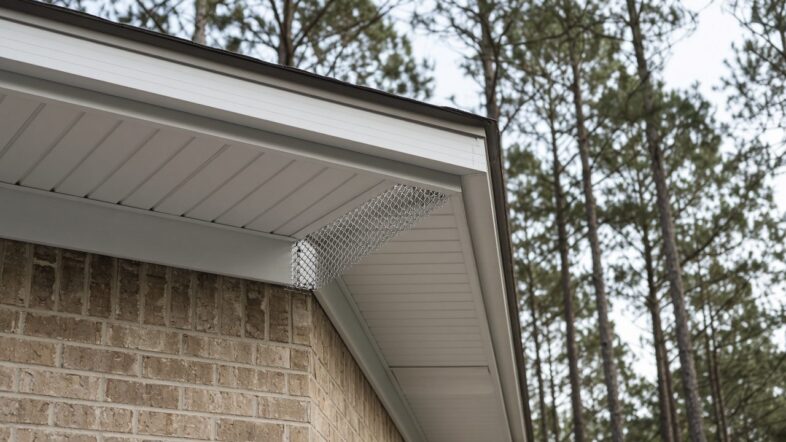
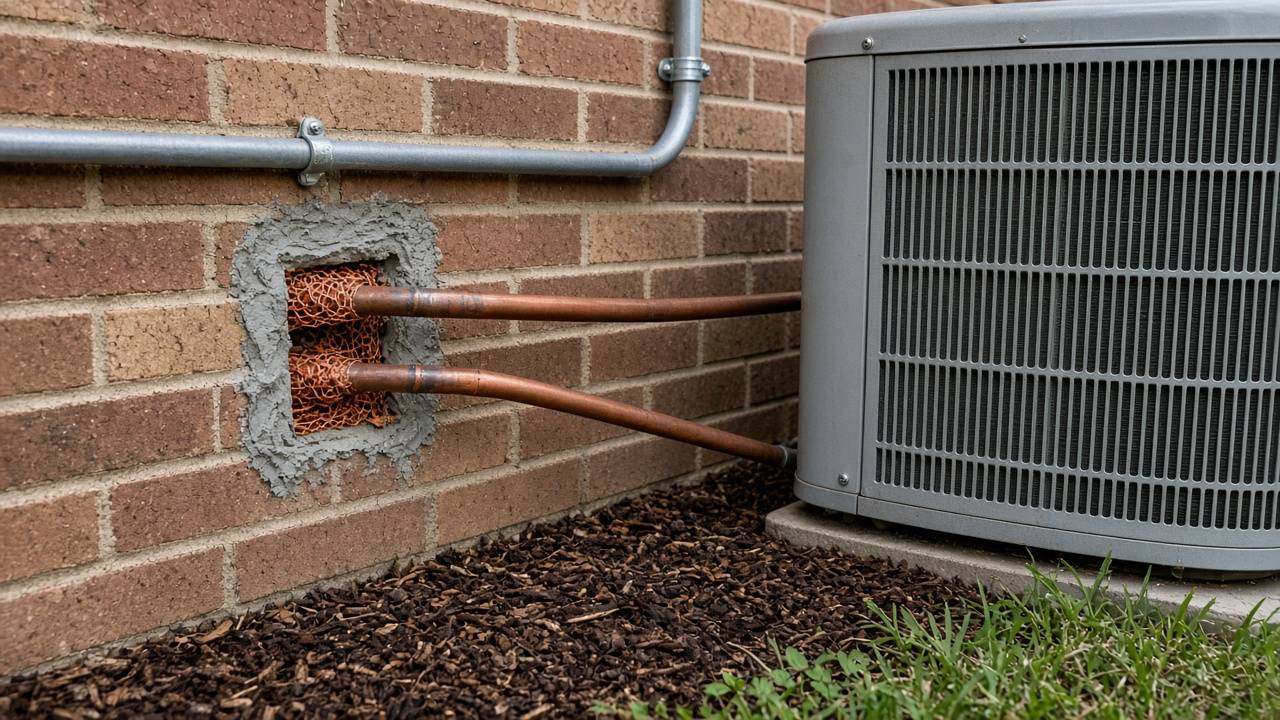
Most rodent problems we see start at a handful of predictable spots. AgriLife recommends covering openings with 1/4-inch hardware cloth or steel wool, which shows how small a gap is worth closing. Walk your home and check:
- Roof lines. Gaps where the roof meets a wall, a dormer or a chimney, plus loose ridge caps and roof vents.
- Soffits and fascia. Pulled-away soffit panels and rotted fascia boards are favorite entry points for roof rats.
- AC lines and pipe penetrations. The hole where the refrigerant line, plumbing, gas line or cable enters the wall is often cut larger than the line itself.
- Garage doors. Worn bottom seals and gaps at the side jambs let mice walk right in.
- Weep holes. These small openings in brick veneer let moisture drain, so they should never be mortared shut. Use weep-hole covers made for brick that keep air flowing.
- Dryer vents and foundation vents with missing or broken flaps.
Rodent-proofing checklist for Conroe and The Woodlands homes
Work through this list in one weekend and you remove most of what attracts rodents:
- Trim trees and vines so branches do not touch the roof or walls.
- Store food tight. Keep pet food, bird seed and pantry goods in sealed metal or hard plastic containers, and bring pet bowls in at night.
- Clean up the yard. Pick up fallen fruit and nuts, and keep firewood, lumber and boxes off the ground and away from the house. AgriLife suggests storing materials at least 18 inches off the ground.
- Fix water sources. Repair dripping faucets and direct AC condensate away from the foundation.
- Seal small gaps around pipes and lines with steel wool or hardware cloth, then finish with sealant or mortar.
- Repair soffits, fascia and vents, and replace worn garage door seals.
- Cover weep holes with proper weep-hole screens rather than filling them.
- Set snap traps along walls where you see activity. AgriLife advises placing them perpendicular to the wall along travel routes.
- Check your work. Look for new droppings or fresh gnawing a week later. New activity means there is still an open entry point.
When DIY isn’t enough
A trap or two can handle a single mouse that wandered in through the garage. It is time to call a professional when:
- You keep catching rodents and the noises do not stop.
- You can hear activity in more than one area, such as the attic and a wall.
- You cannot easily reach or work on the roofline and soffits.
- You find chewed wiring or heavy droppings in the attic.
- You have mice in the house even after sealing what you could find.
AgriLife calls rat-proofing the most permanent means of control. Trapping removes the rats you have; exclusion keeps the next ones out. Most failed DIY efforts trap well but miss an opening at the roofline.
What CPL’s rodent inspection and exclusion covers
CPL Pest Control LLC handles rodent control across Conroe, The Woodlands and the Greater Houston area. Here is how it works:
- Free rodent inspection. Chris checks the attic, roofline, soffits, garage and exterior for droppings, rub marks, nests and entry points, then explains what he found.
- Baiting and trapping. Bait and traps go where rodents are actually traveling, following product label directions.
- Exclusion. We seal the exterior entrances rodents are using to get inside.
- Follow-up. Choose one-time rodent control or ongoing service, whichever fits your home.
See our rodent control in Conroe page for service details.
If you are in The Woodlands, see our pest control in The Woodlands, TX page. Closer to downtown Conroe, visit our pest control in Conroe, TX page. For homes farther south, we also cover pest control in Houston, TX.
Frequently asked questions about rats in Conroe
When do rats usually get into Conroe homes?
Rodents are active year round in Southeast Texas, but fall cold fronts push many of them indoors. Texas A&M AgriLife reports that roof rats have the most young in winter and spring, so sealing your home in fall helps stop a bigger problem later.
How small an opening can rats and mice use?
Smaller than most people expect. Texas A&M AgriLife recommends covering openings with 1/4-inch hardware cloth or steel wool, so even small gaps around pipes, AC lines and vents are worth sealing.
How can I tell if I have rats in my attic?
Listen after dark for scratching and running, and look for droppings, gnawed insulation or wiring, and greasy rub marks on rafters. A free rodent inspection can confirm whether it is rats, mice or a larger animal.
Should I seal weep holes to keep mice out?
No. Weep holes let moisture drain out of brick walls. Use weep-hole covers made for brick that block rodents while still letting air and water pass.
Can I get rid of rats myself?
You can trap a few rodents, but if they keep coming back, there is still an open entry point. Texas A&M AgriLife calls rat-proofing the most permanent means of control, which is why CPL combines trapping and baiting with sealing.
Ready to rodent-proof your Conroe home?
The sooner you find the way in, the fewer rodents you will deal with this winter.
Free rodent inspection from CPL Pest Control LLC
Call or text Chris at 281-683-6737 for Conroe, The Woodlands and the Greater Houston area. We answer evenings and weekends.
Call 281-683-6737 | Text Chris | Book a free inspection | Contact us
Full 30 day money back guarantee, if you are not completely happy with our service.
About the author: Christopher Villarreal owns CPL Pest Control LLC (Texas TPCL license 0567655). CPL Pest Control LLC has been in pest control for 20 years, is fully licensed and insured, and serves Houston and the Greater Houston Area, including Conroe and The Woodlands.
Originally published May 27, 2024. Updated November 3, 2026.
