📞 Call 281-683-6737 for a Free Inspection
Is it too late to treat fire ants in my Katy yard?
No, as long as the ants are still out looking for food. Texas A&M says fire ants forage when the soil surface is between 70 and 90°F, and that in winter they forage little and rarely pick up bait (Texas A&M AgriLife Extension, The Texas Two-Step Method). That means warm late-fall afternoons in Katy are your last good chance to get bait into the colonies before cold weather shuts them down. Mounds you need gone sooner can be treated one at a time.
Fire ant mounds in your Katy yard? Call or text Chris at 281-683-6737 for a free yard inspection. We answer evenings and weekends.
Call | Text | Book online
Why does Katy have so many fire ant mounds?
Fire ants are everywhere in this part of the state. Texas A&M says the red imported fire ant reached Texas in the 1950s and now infests the eastern two-thirds of the state (Texas Imported Fire Ant Research and Management Project, History). A few things about Katy make it easy for them:
- Three counties, one town. Katy sits on I-10 where Harris, Waller and Fort Bend counties meet, about 25 miles west of downtown Houston (Texas State Historical Association, Handbook of Texas: Katy). Fire ants don’t stop at a county line or a fence, so one untreated lot keeps feeding ants into the yards around it.
- Old farmland, now lawns. Katy started as a farm town. William Eule brought rice farming to the area in 1901, and rice replaced cotton, peanuts and corn (TSHA). A lot of that open ground is now turf, and Texas A&M built its Two-Step Method for heavily infested turfgrass like home lawns (Fire Ant FAQ).
- Lots of new yards. The city of Katy grew from 11,775 people in 2000 to 21,894 in 2020 (TSHA population counts, Handbook of Texas). Texas A&M notes that shipments of nursery stock or soil from an infested area can move whole colonies (History of the red imported fire ant), so new sod, landscaping and fill dirt are worth a second look.
- Heavy rain moves them. Texas A&M also says fire ants spread by floating to new places in floodwater (same source). After a big Katy storm, mounds can turn up where you didn’t have them before.
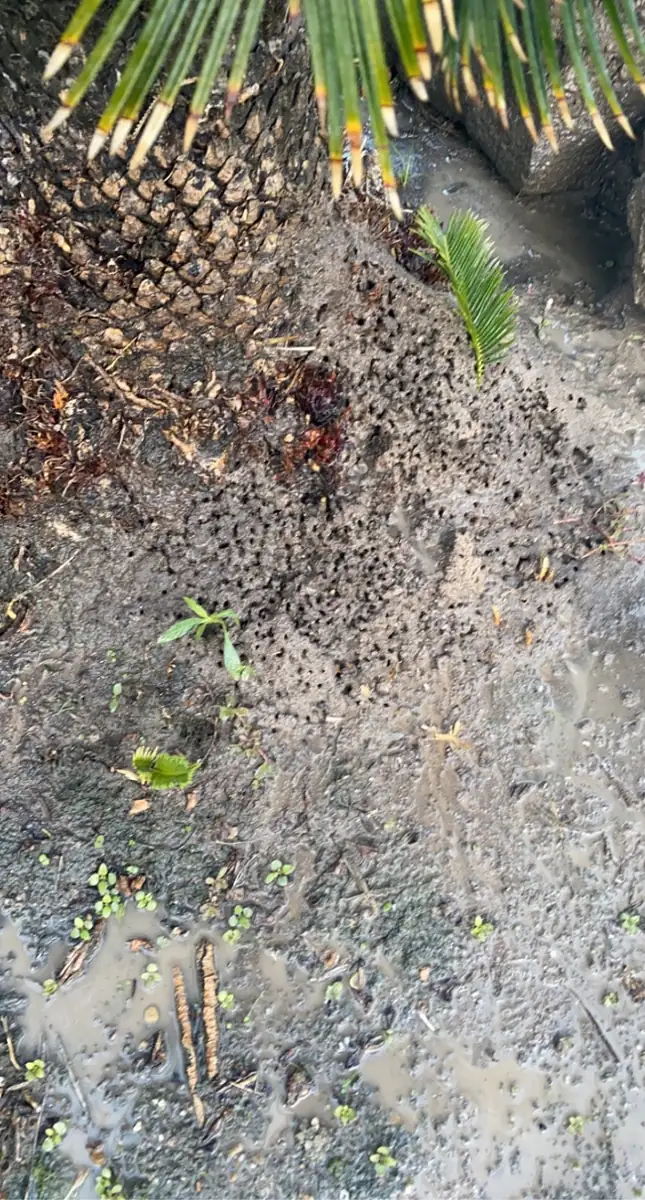
How do I know they’re fire ants and not another ant?
Texas A&M lists these signs (How can I tell if I have fire ants?):
- A mound of fluffy, worked soil, especially a few days after a heavy rain.
- No opening in the center. Fire ants come and go through underground tunnels, unlike most ants.
- Ants of different sizes. Workers run from about 1/8 to 1/4 inch long. Many other ants are all one size.
- Dozens to hundreds of reddish-brown ants run up grass blades and sticks when the mound is disturbed.
- A burning sting that turns into a white blister a day or so later.
Free inspection. Not sure what’s building mounds in your lawn, or how many colonies you have? Chris will walk the yard, beds, slab edge and A/C pad, show you what he finds, and give you a price before any work starts. Book your free inspection or call or text 281-683-6737.
Will fire ant bait still work when the nights turn cool?
On warm days, yes. On cold days, not much. Here’s what Texas A&M’s fire ant research team says:
- Bait only works if ants pick it up. Fire ants forage when the soil surface is 70 to 90°F. During winter, they forage little and rarely pick up baits (AgriLife Extension, L-5070). Bait put out in cool weather, below about 65°F, doesn’t do the job (Fire Ant FAQ).
- Test before you spread. Put a little bait, a potato chip or a slice of hot dog next to a mound. If the ants start carrying it off within 30 minutes, they’re foraging (Two-Step Method).
- Pick a dry day. Spread bait when the grass and ground are dry and no rain is expected for 24 to 48 hours (Two-Step Method).
- Be patient. Baits are slow. Texas A&M says they take weeks to months to reach 80% to 90% control, so a late-fall bait keeps working over the winter.
- Mound treatments are faster. For a mound by the patio or the kids’ swing set, Texas A&M says liquid mound drenches generally take out a mound within a few hours (Two-Step Method).
Texas A&M’s ideal window for fall bait is late August through mid-October (Two-Step Method). If you missed it, a warm late-fall day is still better than waiting for spring, when cool soil keeps ants from taking bait.
How does CPL handle fire ants in Katy yards?
CPL Pest Control LLC works from the same playbook Texas A&M recommends for heavily infested lawns: treat the whole yard, then deal with the problem mounds.
- Free inspection. We walk the lawn, flower beds, slab edge, sidewalks, A/C pad and play areas, and show you where the mounds are, including the small ones you may not have noticed.
- Treat the yard, not just one mound. One mound usually means more colonies nearby, so we treat beyond the mound you pointed out.
- Problem mounds. Mounds near doors, walkways and play areas are treated directly so you can use the yard again.
- Follow-up. We tell you what to watch for after the next rain, and when it makes sense to call us back.
If you see other pests while we’re there, like roaches around the slab or spiders along the eaves, we can look at those at the same visit. Learn more about pest control in Katy.
Our guarantee: 30-day guarantee if you are not completely happy with our service. No contracts.
What can I do in my Katy yard right now?
These steps come from Texas A&M fire ant guidance:
- Leave active mounds alone. Kicking or digging a mound sends ants up in numbers and stops them from picking up bait.
- Don’t water the lawn right after a bait goes down, and don’t spread bait if rain is due within 8 hours (AgriLife Extension, L-5070-1).
- Team up with neighbors. Fire ants travel from yard to yard, so Texas A&M suggests treating with your neighbors or your HOA at the same time (Tackle fire ants in the fall). That matters in Katy subdivisions where yards share fence lines.
- Check new sod and bedding soil before it goes down, since soil and nursery stock can carry colonies.
- Look around the A/C pad, meter boxes and sidewalk edges, where soil can build up against the house.
Frequently asked questions about fire ants in Katy
Do fire ants go away in the winter?
No. Texas A&M says that in winter, when soil is cooler, fire ants may still build mounds but forage little (L-5070-1). The colonies are still there. They come back strong when it warms up.
Does pouring boiling water on a mound work?
Sometimes. Texas A&M says 2 to 3 gallons of very hot or boiling water kills the ants about 60% of the time. Otherwise they usually move somewhere else, and the hot water also kills the grass around the mound (Two-Step Method).
Why do new mounds pop up after it rains?
Rain softens the soil and colonies push up fresh, fluffy mounds. Texas A&M also says new colonies often appear after the next rain, even in treated areas, because ants move back in from untreated land (Fire Ant FAQ).
Do you cover Cinco Ranch, Fulshear and Brookshire?
Yes. We serve Katy, Cinco Ranch, Fulshear, Brookshire and west Houston. Call or text 281-683-6737.
Is the yard inspection free?
Yes. The inspection is free, and you get a price before any work starts.
Ready to get fire ants out of your Katy yard?
The warm days that let bait work won’t last all winter. Call, text or book online, and Chris will walk your yard, show you where the colonies are, and give you a price before any work starts. We answer evenings and weekends.
Call 281-683-6737 | Text Chris | Book a free inspection
Related reading and services:
- Pest control in Katy, TX
- Fire ants in your Conroe yard this fall: what works
- Pest control in Houston, TX
- Contact CPL Pest Control
About the author: Christopher Villarreal owns CPL Pest Control LLC (Texas TPCL license 0567655) and has over 20 years of experience in pest control. CPL Pest Control LLC is licensed and insured and serves Katy, west Houston and the Greater Houston area.
Published November 18, 2026.