📞 Call (956) 287-2118 for a Free Inspection
Why are rats getting into Harlingen homes this fall?
Rats move into Harlingen homes in the fall because they’re looking for shelter, food and a place to raise their young, and Texas A&M AgriLife says roof rats have their heaviest production of young in the winter and spring (Texas A&M AgriLife, Managing Rats and Mice). If you hear scratching in the attic at night, it’s best to act now, before a few rats turn into a family. Rat control in Harlingen works best when you find how they’re getting in, remove the rats and seal the gaps.
Hearing rats in your Harlingen attic or walls? Call or text Chris at 956-287-2118 for a free inspection.
Call | Text | Book online
Which rats get into Harlingen homes?
Texas A&M AgriLife names three rodents that live alongside people in Texas: the Norway rat, the roof rat and the house mouse (Texas A&M AgriLife). Here’s how to tell the rats apart:
- Roof rats are climbers. AgriLife says they seldom burrow and normally nest in double walls and attics. They’re grayish-black with a pale underside, 12 to 18 inches long counting the tail, and the tail is longer than the body.
- Norway rats are diggers. They burrow under foundations, floors, stacked goods and trash.
- A quick rule: AgriLife says if the nest is high, it’s usually a roof rat. If it’s underground, it’s almost always a Norway rat.
AgriLife also says 100 or more roof rats can live together in one place, while 40 Norway rats would be a heavy population. That’s why one rat in the attic is rarely just one rat.
What makes Harlingen homes easy for rats to get into?
- A lot of older houses. Half of Harlingen’s homes were built in 1988 or earlier, and about 23% were built before 1970 (American Community Survey 2024 5-year estimates, Census Reporter). Older trim, soffits and rooflines often have the gaps rats use.
- Water and cover running through town. The Arroyo Colorado runs through the middle of Harlingen, past Hugh Ramsey Nature Park, the Harlingen Thicket and C.B. Wood Park (Visit Harlingen). Brush, trees and water close to neighborhoods give rodents places to live and travel.
- Backyard citrus. AgriLife says about 14% of Texas citrus acreage is in Cameron County (Texas A&M AgriLife Extension, District 12), and a lot of Harlingen yards have an orange or grapefruit tree. UC IPM says roof rats often feed on oranges and other fruit and sometimes leave hollow fruit skins hanging on the tree (UC IPM, Roof Rats in Citrus).
- Storm damage. In March 2025, Harlingen reported a record 21.5 inches of rain in one week (Texas Tribune, March 28, 2025). Water-damaged wood, loose siding and roof repairs that were never finished can leave openings behind.
What are the signs of rats in a Harlingen attic?
- Scratching, running or gnawing sounds in the ceiling or walls at night
- Droppings in the attic, along walls, in cabinets or in the garage
- Chewed wires, insulation, boxes or stored food
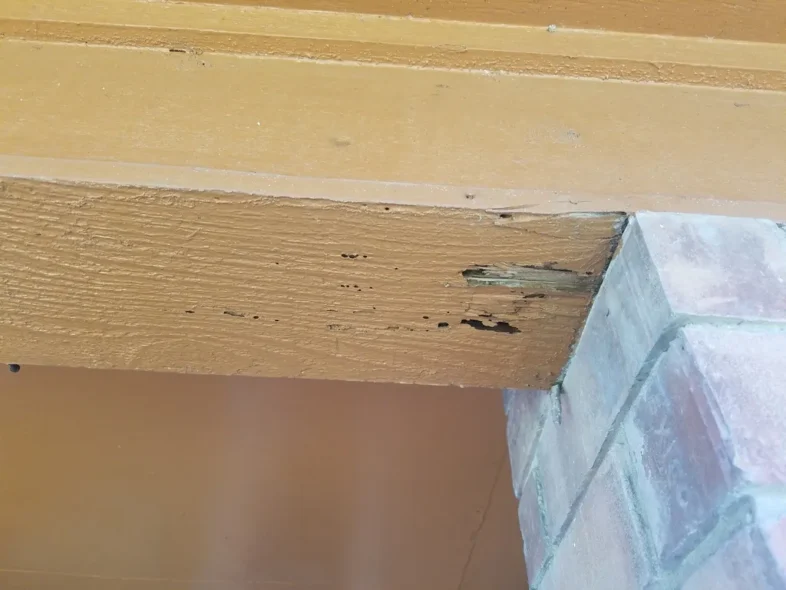
- Gnawed holes around eaves, soffits, vents and where pipes go through the wall
- Hollowed-out oranges or grapefruit on your trees, or fruit on the ground that’s been chewed open
- Greasy dark marks along the paths rats travel
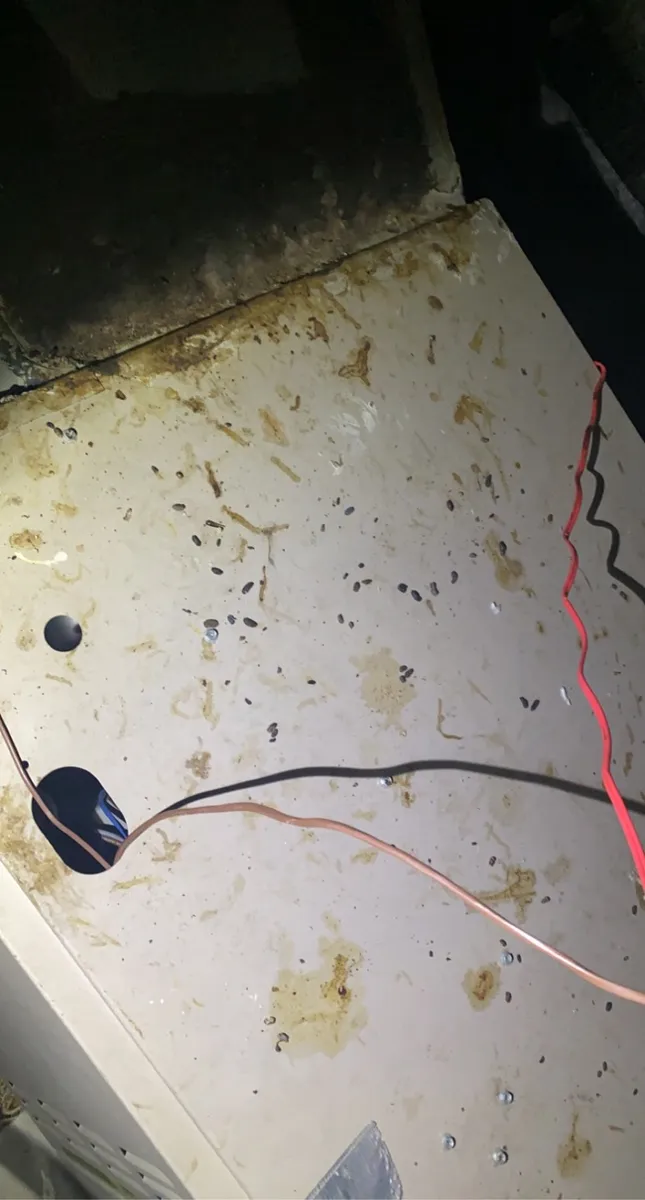
Free rodent inspection. Not sure what’s in your attic? Chris will check the attic, roofline, garage and the outside of your home, show you the droppings and entry points, and explain what he finds. Book your free survey or call 956-287-2118.
Can rats in Harlingen make my family sick?
They can. Texas DSHS says flea-borne (murine) typhus is spread by infected fleas carried by rats, opossums, cats, dogs and other small mammals (Texas DSHS, Flea-borne Typhus). Harlingen is in Cameron County, which reported 621 cases of flea-borne typhus from 2008 through 2025, including 54 in 2025 (2024 and 2025 data are provisional, Texas DSHS cases by county).
Rats also chew. Gnawed wiring, ruined insulation and contaminated food are some of the most common problems they leave behind. Don’t sweep up droppings dry, and wear gloves if you have to handle a dead rodent. This is general information, not medical advice.
If you’re also seeing fleas, read our guide to fleas and typhus risk in Edinburg. It covers how to stop fleas across the Valley.
How does CPL handle rat control in Harlingen?
CPL Pest Control LLC uses the same approach Texas A&M recommends:
- Free inspection. We check the attic, roofline, garage, crawl spaces and the outside of the house for droppings, rub marks, nests and entry points.
- Baiting and trapping. We combine bait and traps, placed where the rats are actually traveling.
- Sealing. We close and seal the outside openings rats are using to get inside.
- Follow-up. You can choose one-time rodent control or ongoing service, whichever fits your home.
What can I do to keep rats away from my Harlingen home?
These steps come from Texas A&M AgriLife and UC IPM guidance:
- Pick up fallen fruit and harvest ripe citrus so it doesn’t sit on the tree or the ground.
- Trim trees and shrubs away from the roof, and keep branches from touching fences and overhead wires. Roof rats travel along branches, wires and fence tops to reach roofs and fruit trees (UC IPM).
- Raise the “skirt” on citrus trees so the ground underneath is open and visible.
- Clean up woodpiles, junk and debris, and store things neatly off the ground.
- Store pet food and birdseed in sealed containers, and keep trash cans closed.
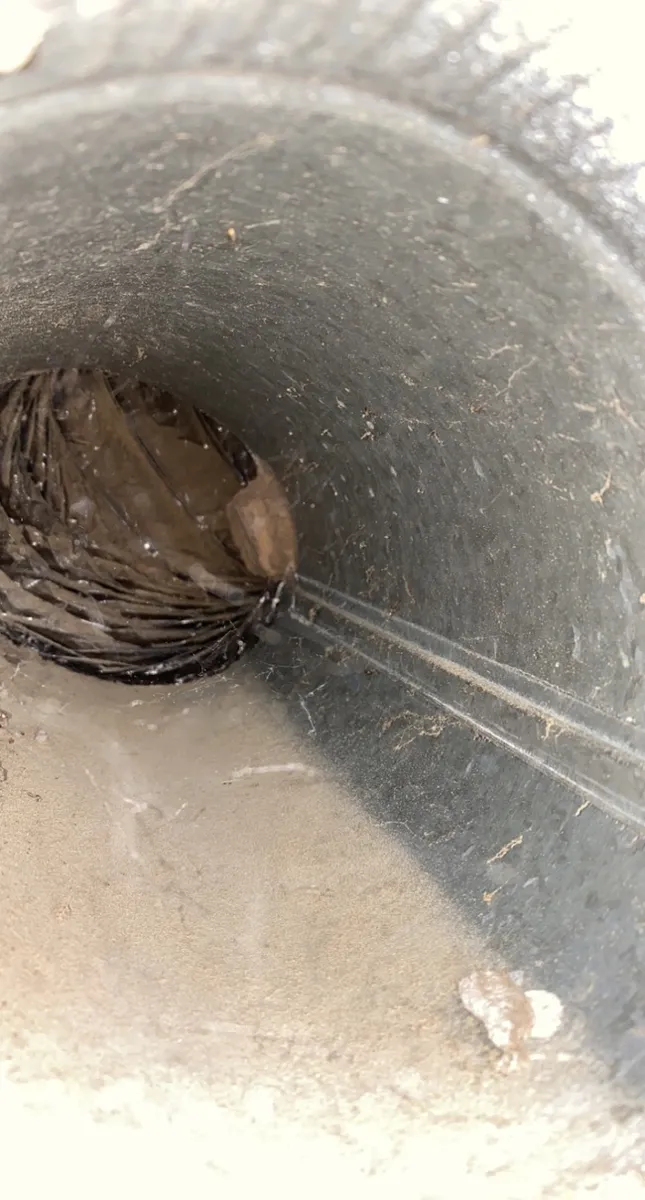
- Check where pipes and A/C lines go through the wall, and look for gaps along eaves and vents.
Frequently asked questions about rats in Harlingen
Why do I hear rats in my attic at night?
Rats are mostly active at night. Roof rats normally nest in attics and double walls, according to Texas A&M AgriLife, so scratching overhead after dark is a common sign.
Are rats in my orange tree the same ones in my attic?
They can be. Roof rats climb well and feed on citrus, and they use tree branches, wires and fences to get to your roof. Keeping branches trimmed back from the house helps cut off that route.
How do I know if it’s rats or mice?
Rats are much bigger, and so are their droppings. AgriLife lists roof rats at 12 to 18 inches long counting the tail. During the free inspection, we’ll identify what you have.
¿Hablan español?
SÃ. Llame o envÃe un mensaje de texto a Chris al 956-287-2118.
Is the inspection free?
Yes. The inspection is free, and you’ll get a price before any work starts.
Ready to get the rats out of your Harlingen home?
The sooner you find the entry points, the fewer rats you’ll have to deal with this winter. Call or text Chris for a free inspection.
Call 956-287-2118 | Text Chris | Book a free inspection
Related reading and services:
– Pest control in Harlingen, TX
– Pest control in the Rio Grande Valley
– Fleas in Edinburg, TX: typhus risk and how to stop them
– Our pest control services
– Contact CPL Pest Control
About the author: Christopher Villarreal owns CPL Pest Control LLC (Texas TPCL license 0567655) and has over 20 years of experience in pest control. CPL Pest Control LLC is fully licensed and insured and serves Harlingen and the Rio Grande Valley.
Published November 4, 2026.